
What if Christians - Reformed ones too! - Rediscovered a Healthy Pride?
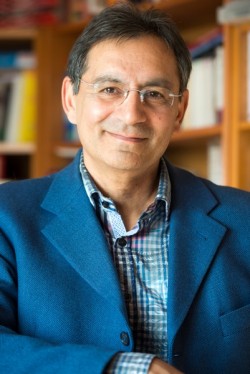
Shafique Keshavjee
22 min read
A few years ago, I was asked to give a presentation at the Assembly of the Protestant Church of Geneva (October 6, 2004). The general title was "Being Church Today." A few days ago, a Reformed friend shared with me an article with a striking title: "It is on pride that we build nations open to the world" (Henri Guaino).
It is on pride that we build nations open to the world.
Henri Guaino
Beyond the article and the media, this title inspired me to send him my presentation, which contains an important section dedicated precisely to a healthy pride to be rediscovered, particularly among Protestant Christians (to whom I was addressing in this conference; I do not forget the healthy prides of Catholics or Orthodox). My text touched him deeply. Even though several elements are dated (the percentage of Protestants has further decreased, the FEPS has become the EERS...), it made me want to revalue this text.
The full conference is available here.
Here is the section of the conference, after a biblical meditation, dedicated to prides and fragilities.
1. Prides and Fragilities
We are accustomed, in the Reformed Church, to look a lot at our fragilities. It is a real strength to recognize them. But sometimes, perhaps out of false humility or even a sneaky pride, we may take pleasure in them!
Yet grace banishes pride and evokes pride!
Grace banishes pride and evokes pride!
Prides
The first characteristic of the Church today should be a healthy pride.

1.1. As members of the Church, we do not place our trust in ourselves—in our possessions, our knowledge, or our power—but we place our "glory," our deep identity, in Jesus Christ (Philippians 3:3). Christ is our greatest pride. His birth, His life, His encounters, His teaching, His healings, His deliverances, His abandonment, His death, His resurrection, His ascension... are inexhaustible sources of inspiration. More than anyone else, Jesus of Nazareth crossed the barriers that people build between themselves. He went to the poor as well as the rich, the outcasts as well as the powerful, women as well as men, children as well as adults, the sick as well as the healthy, the 'disturbed' as well as the 'well-ordered,' the non-Jews as well as the Jews. Jesus is the greatest boundary-crosser humanity has ever known. The greatest overturner of the established disorder as well. And the magnitude of His greatness lies in the depth of His humility. Our "title of glory" is in the Cross of Christ (Galatians 6:14), our pride is in His humility.
1.2. Through Christ, we place our pride in God (Romans 5:11). Thanks to Jesus, we have discovered that the most opaque Mystery of the universe is Incarnation (God is human, humans are inhumane), Reconciliation (God is the alteration of what in us is alienation), and Communion (God is intimacy in otherness). Placing our faith in Jesus Christ means welcoming through the Holy Spirit a Presence that expands our horizon to infinity. It is also allowing ourselves to be transformed by the most fundamental principle of non-exclusion of others.
1.3. Through the God of Jesus Christ, we place our pride in this "cloud of witnesses" (Hebrews 12:1), this people of God, this community of women and men called, transformed, and sent by His Spirit. Yes, we can be proud of all these witnesses who, through the centuries, have passed on to us this knowledge of the living God. "Great is the pride I have in you," said Paul (cf. among other texts 2 Corinthians 7:4). The Church, Body of Christ, is thus also a subject of pride.
1.4. Through this Community of faithful and unfaithful Christians, we have received the Bible, of which we are proud. These inspired texts, of extraordinary diversity, bear witness to the mysterious Presence of God at the source, at the heart, and at the completion of the universe, to His commitment to all humans and to the Jewish people in particular, to His coming in Christ and to His project of reconciling everything in Him, to His loving proximity and to His critical distance regarding our prodigious and disturbed behaviors, beautiful and tortuous, creative and destructive. The Bible is certainly the book that has most marked the West; it is its most precious literary treasure.
In a recent survey in France, over 2000 people revealed what their favorite books were. The Bible comes in first place, followed by Les Misérables by Victor Hugo, who himself stated: "Know that the most philosophical, the most eternal book is the Holy Scripture. Therefore, sow the fields with Gospels, one Bible per cabin."
Thus, as Protestants, we share this quadruple pride—in Jesus, in God, in the Church, and in the Bible—with all other Christians.
With the other Christians of this country, we can be proud together of Switzerland, of what our values and commitments have produced, particularly in terms of constitutions and institutions (schools, hospitals, social services, etc.), conviviality, and creativity.
But as Protestants, we also have our particular subjects of pride (just as people from other Churches or religious traditions have theirs!).
1.5. One of the Greek terms in the New Testament that we translate as "pride" is parrèsia. Its etymology (pan, all and rhèma, word) literally means "freedom to say everything," hence "openness, frankness, courage, assurance". Protestants, certainly more than other Christians, have defended and promoted this freedom of expression, not only regarding the Bible but within society. From this freedom of speech, for us as well as for others, we can be proud! The defense of human dignity, of the rights of men and women, first developed in Anglo-Saxon countries (England, North America) before being revalued on the Old Continent, particularly during the French Revolution. Thus, the fundamental values of freedom of expression, human dignity, equality between men and women, pluralism, democracy, scientific research... have been deeply nourished by Protestant Christianity. With their acute sense of these values, it is the Protestants who have been at the forefront of ecumenism and interreligious dialogue (I will return to this).
1.6. They are also the ones who have enabled real economic prosperity, of which we can be proud (before criticizing its excesses). The orientation of human energy not towards the beyond to gain salvation—since it is offered by grace and received in faith—but towards this world to transform it; the valorization of everyone's skills—all participate in the ministry of priest, prophet, and king; rational organization of work within the enterprise—and developed outside the family home; schooling and literacy for all—to read the Bible; transmission of values such as trust, honesty, rational management, frugality... all these contributions are specifically Protestant or in which they have excelled. All these contributions have made Protestant countries among the most prosperous in the world.
1.7. Protestants can also be proud of the organization of their Churches. Laypeople are involved at all levels of decision-making, women have access to all ministries, and structures adapt to the changes occurring in society.
Proud we can be, and I am, of so many remarkable, dedicated, generous, and competent Protestant laypeople and ministers, with whom we walk together from birth to death, supporting each other in good and bad days.
A transformation of the Church and society cannot begin without a transformation of mindsets. While in the 16th century it was the rediscovery of "justification by faith" that triggered this tremendous wave of renewal, one may wonder if it is not the revaluation of "pride in Christ" that will regenerate our lives, our communities, and our societies during this century.
While in the 16th century it was the rediscovery of "justification by faith" that triggered this tremendous wave of renewal, one may wonder if it is not the revaluation of "pride in Christ" that will regenerate our lives, our communities, and our societies during this century.
Fragilities
If we can be proud of economic prosperity as well as of values such as freedom and pluralism—promoted with others than Protestants, of course—we must recognize that they have also engendered a dark side in society and in the Church that must be confronted.
A. In Society
1. The economic prosperity linked to Protestantism—I remind you, the majority of multinationals were created in sociologically Protestant countries, and these are the countries with the highest GDP per capita in the world—also has its limits and drawbacks. The acquisition of this prosperity has had two major consequences, among others: on the one hand, a displacement of "pride-assurances" and on the other hand, a decline in demographics.
1.1. The acquisition of material wealth has resulted in a loss of recognition for spiritual wealth which is the foundation of the West.
The eighth chapter of the book of Deuteronomy remains astonishingly relevant.
"Be careful not to forget the LORD your God by not keeping His commandments, His customs, and His laws that I give you today. If you eat and are satisfied, if you build beautiful houses to live in... if you have much silver and gold, many goods of all kinds, do not become proud and forget the LORD your God. (...) Do not say to yourself, 'My own strength and the power of my hand have gained me this wealth,' but remember that it is the LORD your God who gives you the power to gain wealth, to confirm His covenant which He swore to your fathers, as He does today" (Deuteronomy 8:11-14; 17-19).
The communal recognition of God has lost its value. (This does not mean that the Swiss no longer pray; on the contrary. According to various surveys, nearly 40% of Swiss people pray every day, and only 10% say they never pray). It should be noted that a significant part of material wealth has been managed very solidly (health insurance, old-age pension, unemployment insurance, recently maternity insurance, various taxes to finance the numerous services of the State...). But this remarkable management has tended to make us forget the foundation that is the assurance placed in God, the only assurance that withstands all trials and upheavals.
1.2. Besides the amnesia regarding God and the contribution of the Churches, prosperity has resulted in a decline in fertility. The security represented by a large family has been replaced by other priorities: personal fulfillment through work and leisure, savings, etc. The demographic decline of Protestants in Switzerland is significant. And no internal reform of the Church structures, however relevant it may be, can counteract this movement. In 1850, 60% of the Swiss population identified as Protestant; in 1960, just over 50%; in 1990, 40%; in 2000, 33%... One in three inhabitants. Unless Protestants decide to have more children, or unless they are encouraged—by their Church authorities?—to do so, this decline will continue. The Protestant population will age regardless of the restructuring of our communities. Material prosperity and demographic vitality seem antinomic. This surplus of economic wealth and the lack of renewal in living forces have resulted in the arrival among us of poorer and more prolific populations (first Italians, Spaniards, and Portuguese Catholics; today Serbs, Croats, Bosnians, Turks, Arabs, Africans, Tamils, Vietnamese..., mostly Muslims, but also Orthodox—or other Christian confessions—Hindus or Buddhists).
1.3. Today, however, this economic prosperity, acquired laboriously (most often through hard work, and sometimes through exploitations that must be criticized), is now shaken. For internal reasons (the burden of insurances and taxes; demographic decline, loss of solidarity) but also external ones (fierce competition between companies on the Western and global level).
This shaken prosperity strongly influences the life of society and the Churches.
Indeed, to protect and enhance the acquired, a dominant discourse consists of wanting to energize companies—which produce—and households—which consume—by lowering taxation. This results in a weakening of the social state with all the upheavals that accompany it (reactions in the medical, educational, social sectors... unable to do as much, or even more with less, and reactions from beneficiaries who see benefits decrease).
Very concretely, the Reformed Churches linked to the State are directly facing this same shock and are seeing a decrease in the number of ministerial positions funded by public money.
Pressures on companies—having to be even more competitive—also generate fatigue and tension whose consequences directly affect the life of the Churches (less availability, need for more rest on weekends...).
2. Protestants defend the value of pluralism. All the more so, it must be admitted, since they are no longer in the majority. (In Vaud, Protestants went from 96% of the population in 1850 to 40% -including 2.2% evangelicals- in the year 2000. Their main partners/rivals are Catholics (34%), the unaffiliated (14%), Muslims (4%), Orthodox (1.6%)...). It is the Protestants who—in the 20th century—worked the most for ecumenism and interreligious dialogue. And as mentioned earlier, this is a source of pride. But these sources of pride face real difficulties.
The Protestant model of ecumenism—a Federation of independent Churches that recognize each other—clashes with other models, notably the Catholic one—a Communion through the recognition of ministries, particularly that of the pope and episcopal ministries. As the internal reform of the Catholic Church desired by Protestants is slow to happen—Church authorities being far too masculine and hierarchical—and as that of the Protestant Churches desired by Catholics does not seem to be happening—refusal to recognize an "episcopal" ministry where it does not exist... and where it does exist!—ecumenism seems blocked. In practice and on the ground, many collaborations exist, thanks be to God and to the thirst for unity of many Christians of all denominations.
The Protestant model of interreligious dialogue—varied, it is true, ranging from the exclusivism of the most fundamentalists to the relativism of the most liberals—faces new challenges. The necessary acceptance of the plurality of religious communities tends to be confused with the indifferent acceptance of the relativism of doctrines and experiences. However, the teachings of the different communities, even if they all contain precious treasures for others, are not equal. Not only on a theological level—openness/closure to the God of Jesus Christ—but also on an axiological level—quality/hierarchy of values. Several religious communities convey understandings of freedom, of women and men, of pluralism, of respect for others that are incompatible with those of the Gospel.
The Protestant pluralism thus clashes with the "pluralisms" of religious groups that benefit from it but do not share its foundations or objectives. The question that arises for Protestant Christians is this: how far can their pluralism make room for another pluralism that denies its own values and objectives?
3. Protestants defend the value of freedom. However, this freedom—on economic, political, sexual, cultural, religious levels...—only has positive meaning if it is oriented by God, that is to say, by the horizon of respect for others and the common good. A political scientist, James Kurth, defined globalization as "Protestantism without God" (!). As if to highlight precisely that the current freedom reigning in international trade is that of the wolf in the sheepfold... A vast challenge for Protestants to promote a form of globalization as "Protestantism with God," or better, in the service of God, thus of all humans and of creation.
The Protestant freedom has favored the individualization of belief (which is not necessarily an individualism of belief). Doctrinal bricolages, using the services of Churches without getting involved oneself, distancing oneself from the constraints linked to community life... all this also affects our relationships among ourselves and with others.
Thus, threatened economic prosperity, the non-recognition of God in the community, demographic decline, the weakening of the social state (which in most cantons of Switzerland still finances the Reformed and Catholic Churches), the prevailing relativism, and the individualization of belief are major challenges that challenge from the outside our communities. To Christian and Protestant pride, we must therefore combine the fragilities of our society, fragilities partly engendered by Protestantism.
Without forgetting, of course, the fragilities within Protestantism itself!
B. In the Protestant Church
1. The rightful Protestant pride is like eroded by a feeling of unjust non-recognition regarding the colossal work that has been done. And it is precisely because I hear so many colleagues worn out by discouragement (difficulties in gathering on Sunday mornings, finding volunteers, ensuring catechism...) or an inhuman task (demands for availability beyond their strength...) that I felt the urge to formulate this reflection.
2. The doctrinal and ethical pluralism is extreme within our Churches, probably more marked than in any other Christian Church or religious community in the world! Among us, we have more and more theologies, ethics, spiritualities, ecclesiologies, problems, and... solutions! And fewer and fewer Protestants, ministers, available laypeople, baptisms... The reforms that our Reformed Churches have undergone are primarily structural changes. A desire for more grouped parishes, regional collaborations, specialized ministers, creativity, and... proximity! In practice, this means more constraints for parish ministers (funeral services hardly decrease and cannot be refused...) who, with less, are expected to do better! Which is a pious wish, to say the least, a deception, or even a sham.
3. To the institutional fragilities of Protestantism are added our own personal fragilities. All crises are familiar to us: illnesses, bereavements, divorces, conflicts, jealousies... and these sometimes push us to despair.
Prides and fragilities. We would like the former without the latter. The Apostle Paul always linked the two.
"The Lord said to me: 'My grace is sufficient for you; my power is made perfect in weakness.' Therefore, I will boast all the more gladly about my weaknesses, so that Christ's power may rest on me." (2 Corinthians 12:9).
Being Church today means rediscovering at the heart of our many fragilities—both external and internal—a healthy pride that can transfigure them: pride particularly in the God of Jesus Christ, the Bible, and the multicolored Community that lives from it.
End of the excerpt.
The conference continues by developing other pairs: 2. Communion and disintegration. 3. Finitude and festivity. 4. Differentiation and community. 5. Correspondence and revitalization. Complete text.
So yes! It is also on a healthy pride that we build Churches open to the world!
Note from February 20, 2021. Several of the themes addressed in this conference have been developed in more detail in my books. For a general presentation of all my books, see this article on my blog titled Succeeding in Life?.
Cf. Xavier Léon-Dufour in his Dictionary of the New Testament.
Cf. Xavier Couplet and Daniel Heuchenne, Religions and Development, Paris, Economica, 1998.
Comments
Join the conversation
Sign in to share your thoughts and engage with the community.