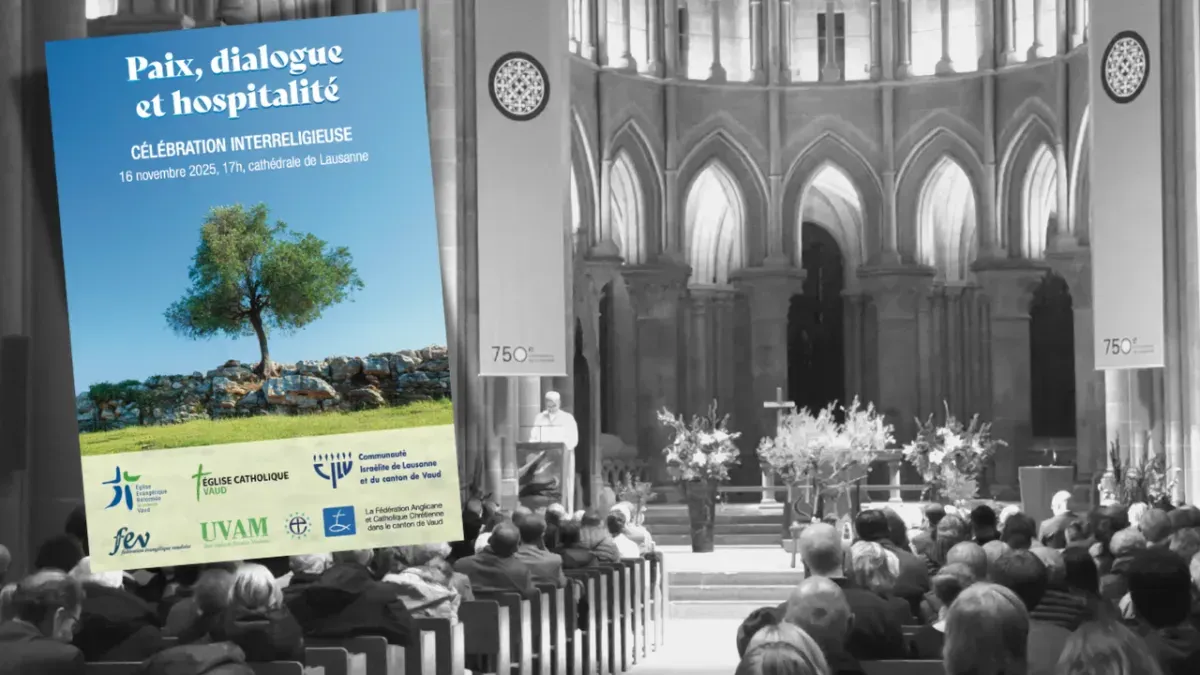
A Recitation of the Quran at Lausanne Cathedral Sparks Controversy
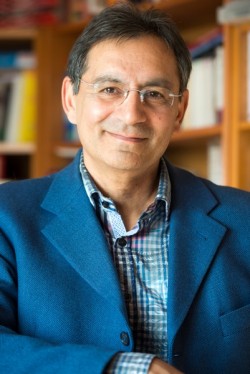
Shafique Keshavjee
10 min read
After two years, I am breaking my silence on this blog.
This period has been lively and filled with beautiful encounters, particularly interreligious ones. I think of a stimulating evening during the Week of Religions where we exchanged views on the Christian, Buddhist, and Bahá'í understandings of the "soul" and its destiny. I am also continuing to finalize my account of the terrible Israeli-Palestinian conflict, shedding light on the abyssal sufferings and hopes of both sides. Through this writing, I am in contact with people holding completely opposing views, while striving to be a "craftsman of peace."
If I am breaking my silence, it is to inform you of a serious event that took place on November 16 at the Cathedral of Lausanne, during an interreligious ceremony.
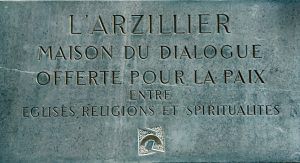
I do not like to "denounce" what is wrong, as I prefer to nurture what is beautiful. My Christian faith is vibrant, my love for the Church is deep, and my quest for the common good is constant. In French-speaking Switzerland, I may be one of the individuals most committed to the service of peace among Churches, religions, and spiritualities. Through the creation of the Arzillier, my involvement in the Vaud Constituent Assembly, my university teaching, and my writings.
But, alas, it is sometimes necessary to name what poses a problem.
The gravity of what happened at the Cathedral is such that three deputies from the Vaud Grand Council have called upon Madame Christelle Luisier, the president of the Council of State, to state that a "red line" has been crossed. Here is their letter.
Two articles have just been published on this subject. One in the media Le Peuple. This article is followed by a survey. The other in the media Watson.
The intention of the ceremony was indeed beautiful: to contribute to peace, dialogue, and hospitality. Numerous speakers from the political and religious world took turns at the Cathedral to constructively affirm the importance of these values.
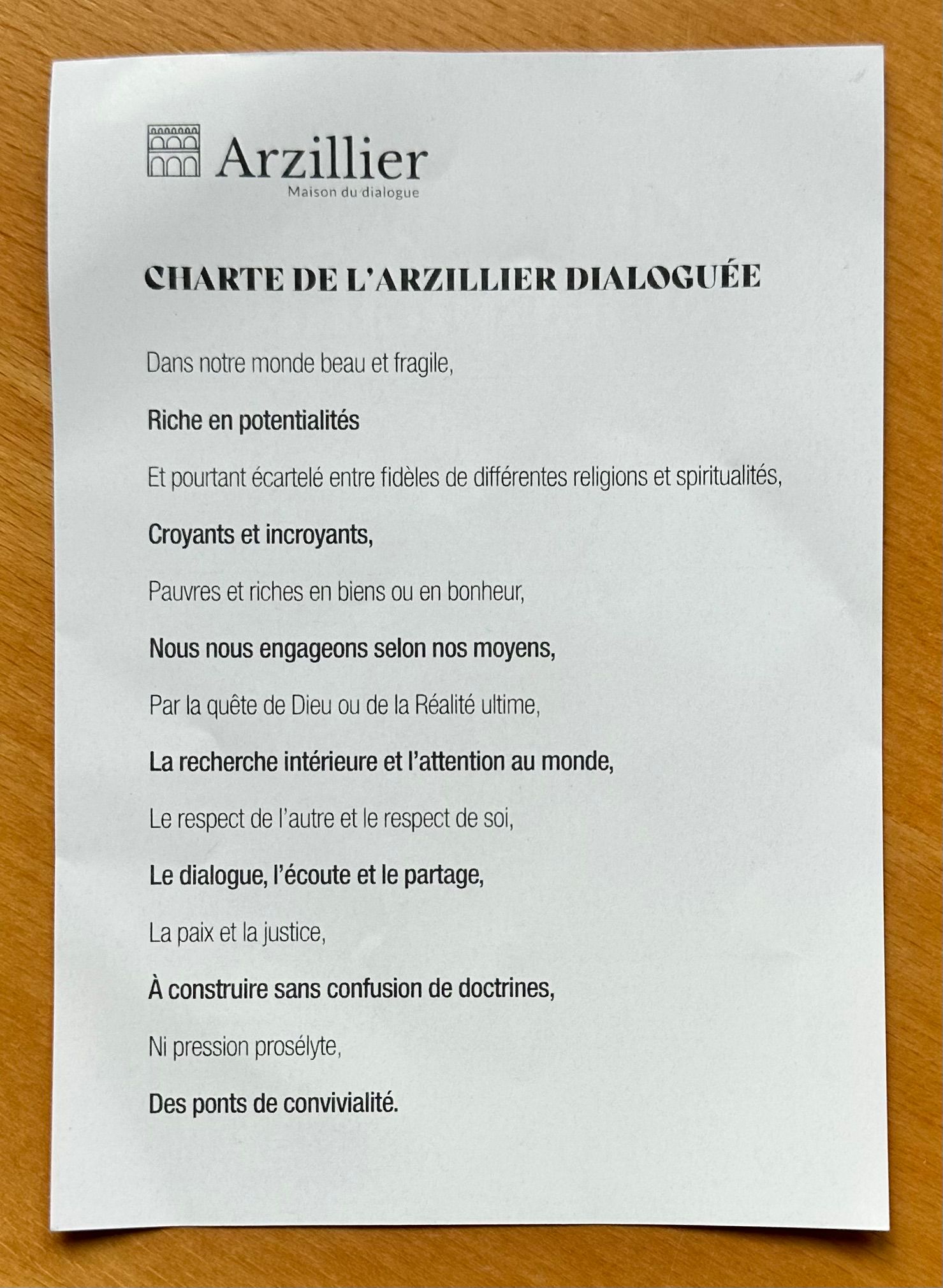
During the ceremony, the Charter of the Arzillier - which I had personally drafted - was dialogued by the entire assembly.
So why the controversy?
For the first time in 750 years of the Cathedral's life, an imam (a member of the Vaud Union of Muslim Associations - UVAM, an organization historically linked to the Muslim Brotherhood) recited in Arabic and French passages from the Quran that subtly call Jews and Christians to adopt the Islamic understanding of Abraham and to embrace Islam. You will find them in the attached document.
For those unfamiliar with the Quran, these words may seem open and friendly. This is how they were received by a large part of the assembly. Especially since the accompanying commentary had no connection to the recited texts. But for anyone who knows even a little about Islam, it is very clear that the verse from Surah 3 cited, and all its literary context, refers to the Christians of Najrân who came to meet Mohammed. All classical Muslim commentaries (such as that of Ibn Kathîr) affirm this. After a peaceful exchange, the prophet of Islam called these Christians to convert to Islam. As they refused to do so, these Christians were allowed to leave safely, but with the status of "dhimmis", meaning "protected" persons with a status of submission far inferior to that of Muslims. This status of inferiority, codified by Sharia, is still applied today in practically all majority Muslim countries. And this status generates great suffering for Christians and all other non-Muslim individuals.
Moreover, this word from Surah 3 is cited in the hadiths of Bukhari, the second source of Islamic revelation. Mohammed referred to this Quranic word when he addressed the Byzantine emperor Heraclius, calling him to convert to Islam. The emperor's refusal to submit to Islam was then considered an act of war by Mohammed. And this refusal, confronting Mohammed, justified the conquest war he launched against the Byzantine Empire. The strategy is well established: the aggressor attacks, and if the victim does not submit, this insubordination is considered a new aggression that justifies a greater aggression.
"In the name of God, the Most Gracious, the Most Merciful, from Mohammad, servant and Messenger of God to Heraclius, king of the Byzantines. Peace be upon him who follows the right path. I invite you to Islam. Embrace it, and you will attain salvation and be doubly rewarded. If you refuse, you will bear the sins committed against the (or some) Arîsiyyin [the Aryans? the laborers? cf. Matthew 21/33s]. "Say: O People of the Scriptures, let us come to a common word between us, that we worship none but God alone, and that we associate nothing with Him, and that we do not take one another as lords besides God. If they turn away, say: "Bear witness that we are Muslims!" (The Quran, Surah 3 (89th): 63-64). Sahîh al-Boukhârî, (volume 1, hadith 7).
Citing such statements expressing a clear "proselytizing pressure" towards Christians in the heart of a Cathedral is not trivial. The president of the UVAM acknowledges that he is not a theologian. But still.
Here is perhaps what is even more serious: that Christian leaders allowed this (out of ignorance, "hospitality," or a desire for "peace"). What should we deduce about their current spiritual and theological discernment?
The Quranic words of Surah 2 dedicated to Abraham, recited at the Cathedral (cf. document above), are equally problematic. They are even at the heart of the Israeli-Palestinian conflict. These words assert that the true lineage of Abraham passes through Ishmael, the Kaaba (in Mecca), and Mohammed. And not at all through Isaac, the Jewish people, the Land of Israel, Jerusalem, and its temple. An explosive subject!
With the Chief Rabbi of Geneva, Mikhaël Benadmon, I will soon give a lecture on this complex theme entitled: "The Land, War, and Peace in the Bible and the Quran." After having been the privileged speaker during a meeting with Salim Munayer, a Palestinian pastor, I am pleased to collaborate here with a Jewish figure.
Here are three fundamental questions that deserve to be debated. With two pastor friends, we posed them directly to Mrs. Laurence Bohnenblust-Pidoux, the Reformed president of this celebration (who is also the president of the Conference of Reformed Churches) and to Mr. Philippe Leuba, president of the Synodal Council. We have requested a fraternal meeting with them to address these questions and we await their response.
1. Do you acknowledge that the primary role of the Cathedral of Lausanne is to testify to the beauty, truth, and welcome of Christ who calls all to Him (John 14/6)?
2. Do you recognize that the UVAM has historical ties to the Muslim Brotherhood?
3. Do you consider it appropriate for an imam from the UVAM to recite in the heart of the Cathedral words from the Quran (2/127-134; 3/64) that subtly call Christians and Jews to submit to Islam?
A fourth question could be:
Would the Islamic centers in the canton of Vaud, in a spirit of reciprocity, accept that Jews and Christians come there to recite strong biblical words that affirm the heart of their identities different from that of Muslims?
If you wish to share your answers to these three (or four) questions with me, you are welcome. As the subject is very sensitive, I will not open this blog to a wide public debate.
Following this serious event that took place at the Cathedral, along with others, I ask for two things:
1. That the Cathedral is never again used for the recitation of Quranic words. As the founder of the house of Arzillier, I believe in the importance of interreligious dialogue, a dialogue in truth that looks candidly at differences. Such dialogue must take place elsewhere than in places of worship. We all make mistakes. What is important is to recognize them with humility and not to repeat them.
2. That Christian authorities better inform themselves about the complexity of Islam (and the other religions present in Switzerland). That they create a discernment group that allows them to navigate the current complexity of orientations and organizations. That these authorities can always better contribute to harmonious coexistence with followers of other beliefs, particularly Muslims, on solid foundations.
Only then, as the Charter of the Arzillier states, will we build bridges of conviviality.
Comments
Join the conversation
Sign in to share your thoughts and engage with the community.